Audit that you can trust
Independent firms audit every Zerion release. The reports are public.



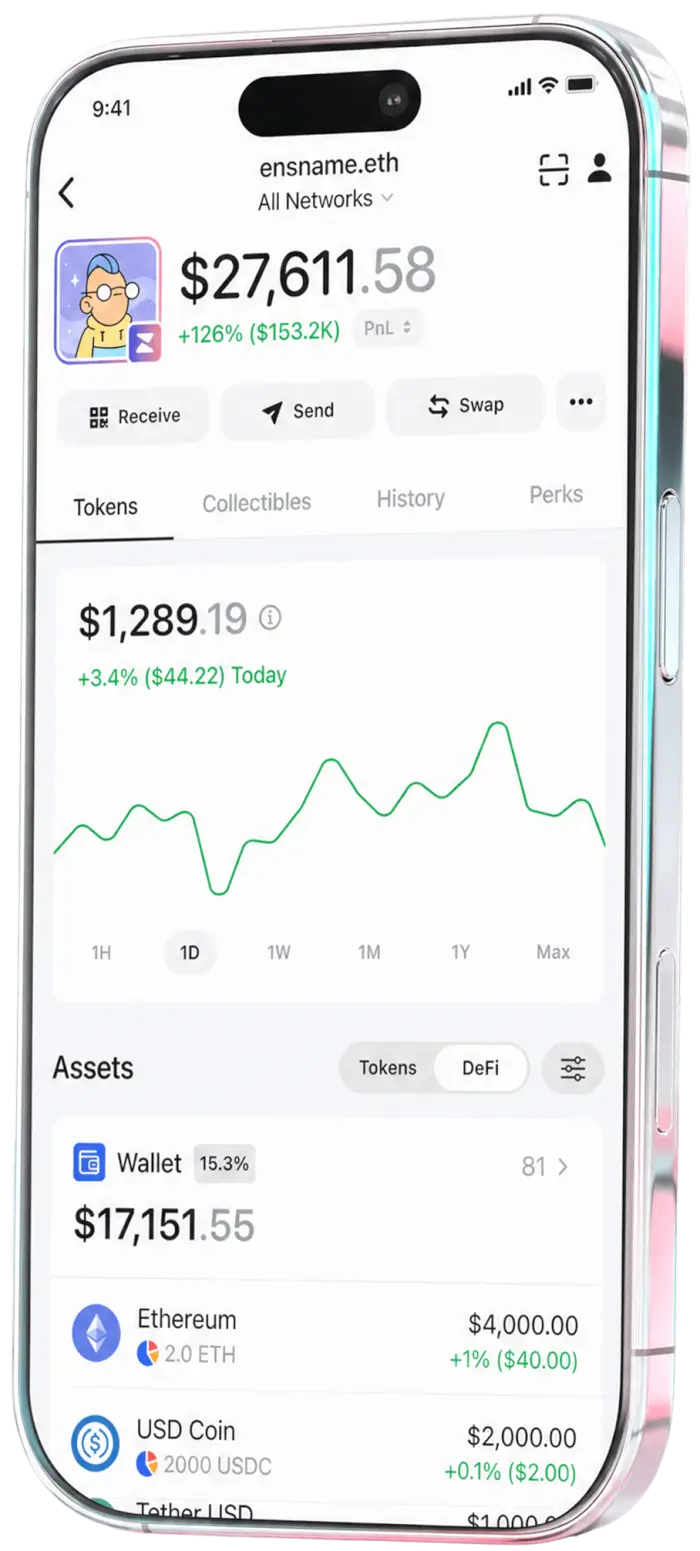
Swap, bridge, and track ETH, ERC-20s, and NFTs from a wallet you fully control — across Ethereum and 65 other chains.
Zerion tracks Ethereum the same way it tracks every other network it supports — automatically, and without giving up your keys.



An Ethereum wallet stores the keys to your ETH, ERC-20 tokens, and NFTs, and signs the transactions that move them. Zerion is a self-custodial Ethereum wallet: you keep the keys, and the same address covers Ethereum plus 65 other networks.
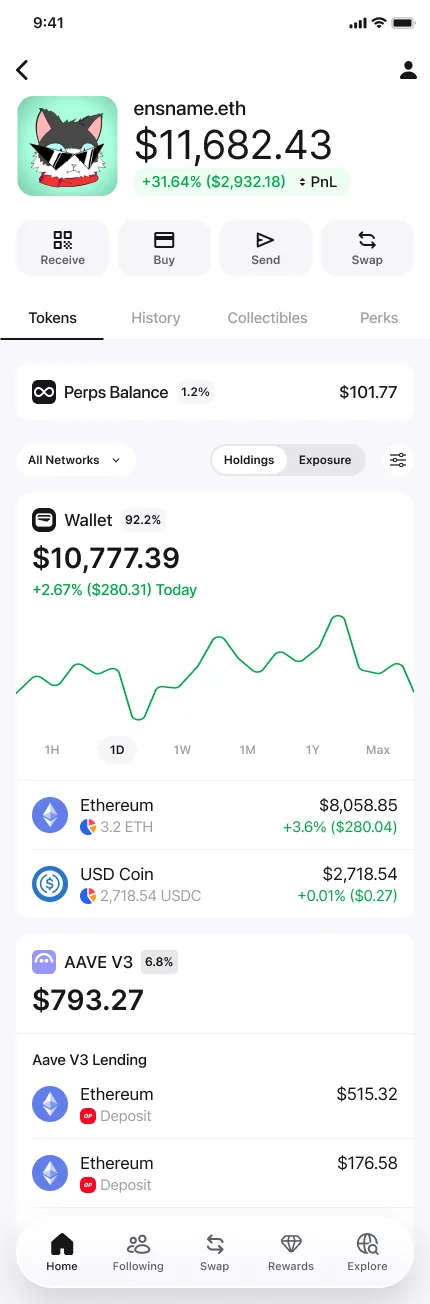
Tokens, DeFi positions, and NFTs on Ethereum — found, priced, and grouped without any setup.
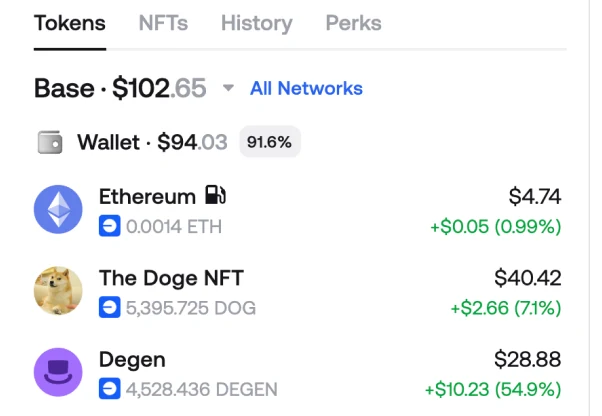
Added automatically, with live prices and per-token profit and loss.
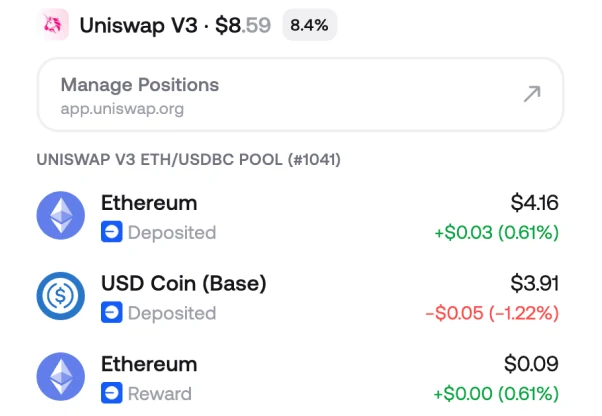
Including LPs, staked assets, deposits, and unclaimed rewards.
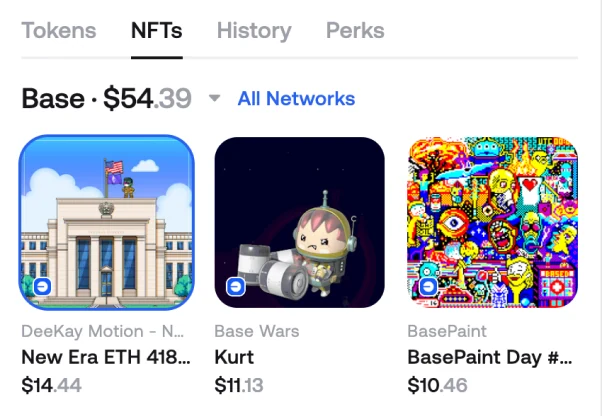
Added automatically, with floor prices alongside your tokens.
One extension for every onchain app. Or the full web app, in any browser.
Self-custodial by design.
Ledger support for extra safety.
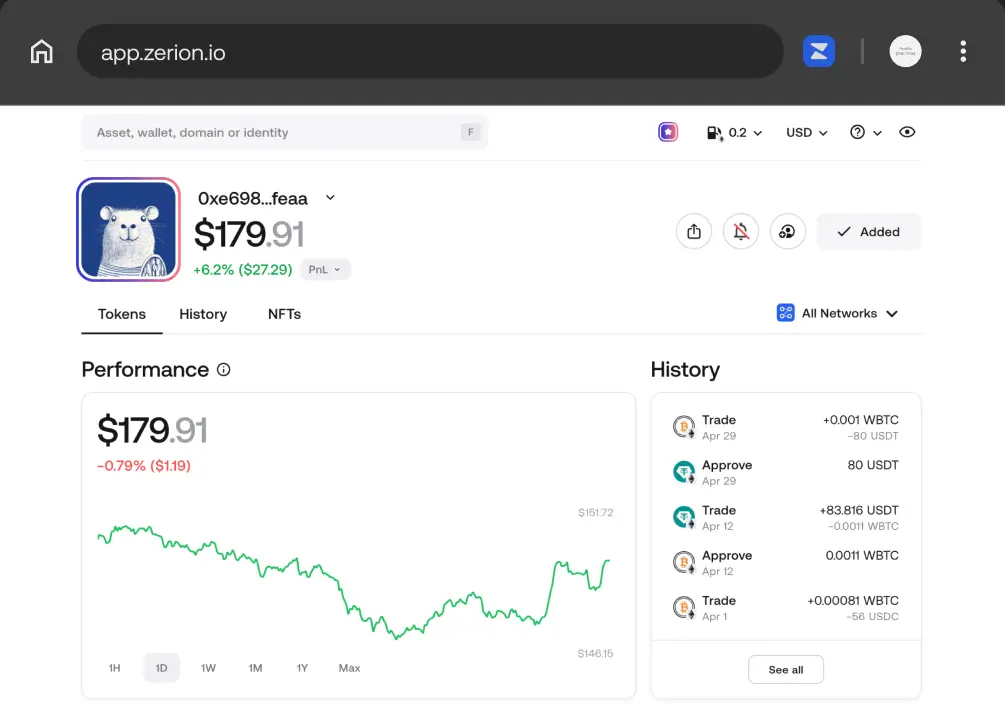
No RPC settings, no network to add by hand.
Get the app on iOS or Android, or add the browser extension. Import an existing wallet or create a new one in seconds.
Get the appBridge or receive assets on Ethereum. It's enabled by default — there's nothing to configure first.
Tokens, DeFi positions, and NFTs on Ethereum are found, priced, and added to your portfolio automatically.
Any token
Your Ethereum balances appear on their own — no contract addresses to paste, no token lists to import.
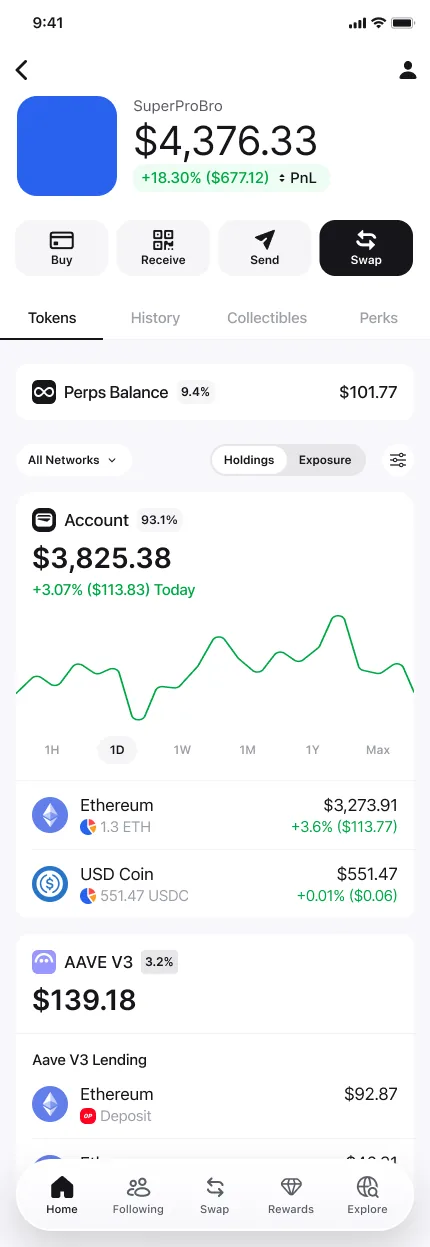
DeFi positions
LPs, staked assets, lending positions, and unclaimed rewards across 4,500+ protocols — detected and valued without any setup.
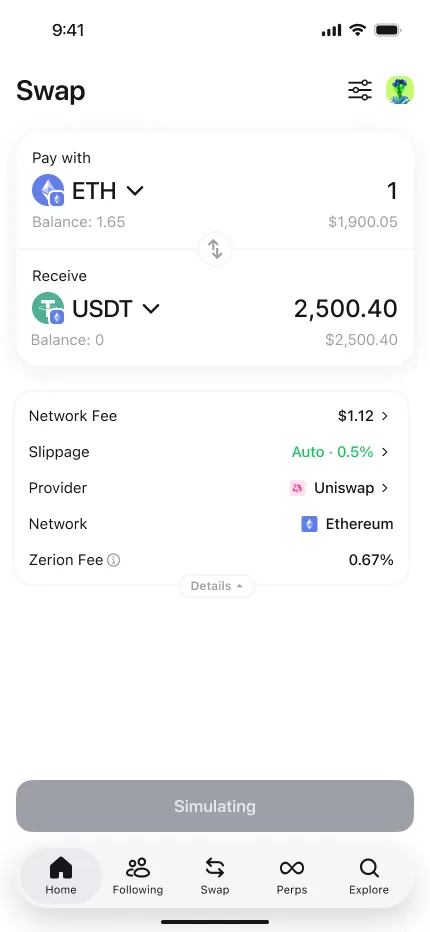
Swap & bridge
Routing across DEXes and aggregators finds the best available price, and moves value onto or off Ethereum in a single flow.
History & NFTs
Every Ethereum transaction in one decoded feed, in plain language rather than raw calldata — with your NFTs in the same wallet.
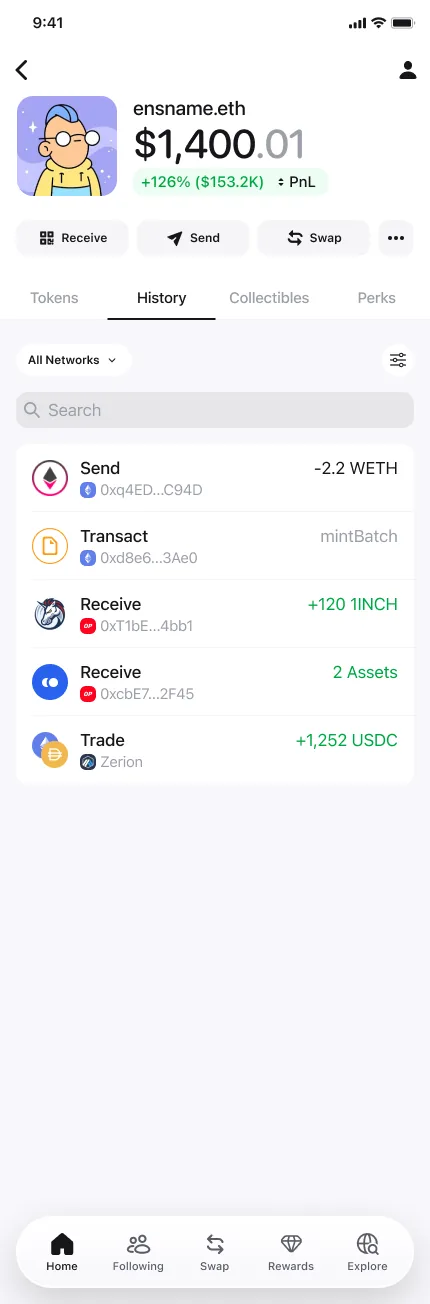
Ethereum is the Layer-1 that most of onchain finance settles to. Its value isn't raw throughput — it's the depth of what has been built there: the deepest DeFi liquidity, the longest-running protocols, and the security assumptions that every rollup above it inherits.
That's also why an Ethereum wallet is rarely only an Ethereum wallet. Assets move constantly between mainnet and the L2s built on top of it: Base, Arbitrum, Optimism, zkSync Era, Scroll, and the rest. A balance you hold today may sit on a different network tomorrow.
Zerion treats that as the normal case. One wallet and one address cover Ethereum and its L2s, 66 networks in total, with tokens, DeFi positions, and NFTs found automatically on each and gathered into a single portfolio rather than a network-by-network hunt.
Fees are the main thing to plan around on mainnet. Every transaction costs gas, paid in ETH, and the price moves with demand — though the Fusaka upgrade's blob scaling cut typical fees sharply, and L2s stay cheaper still. Zerion shows the full cost before you sign, and when mainnet runs hot, moving to an L2 is one bridge flow away in the same wallet.
Don’t trust. Verify. Independent audits and open code, both public.
Independent firms audit every Zerion release. The reports are public.
Our browser extension is open source.

Self-custodial, multichain, and built for everything onchain — Ethereum included.
Get Zerion Wallet →
Balances, positions, and decoded history across 42 chains — one API call, no indexing.
Start building →

Ethereum questions we get asked most.